Custom Semi-Automatic Blister Card Heat Sealing Machine
Product Overview:
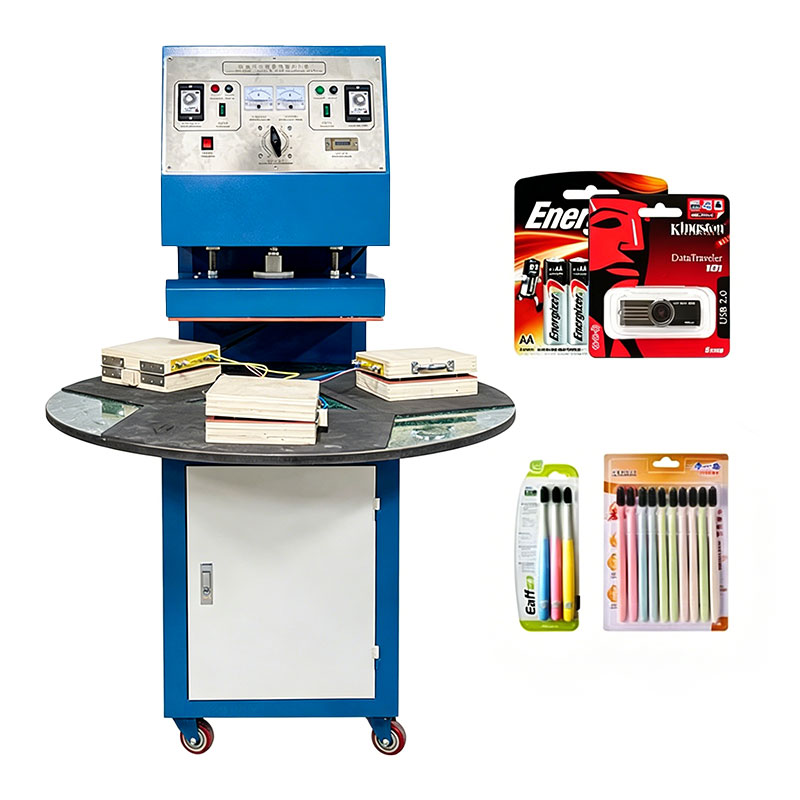
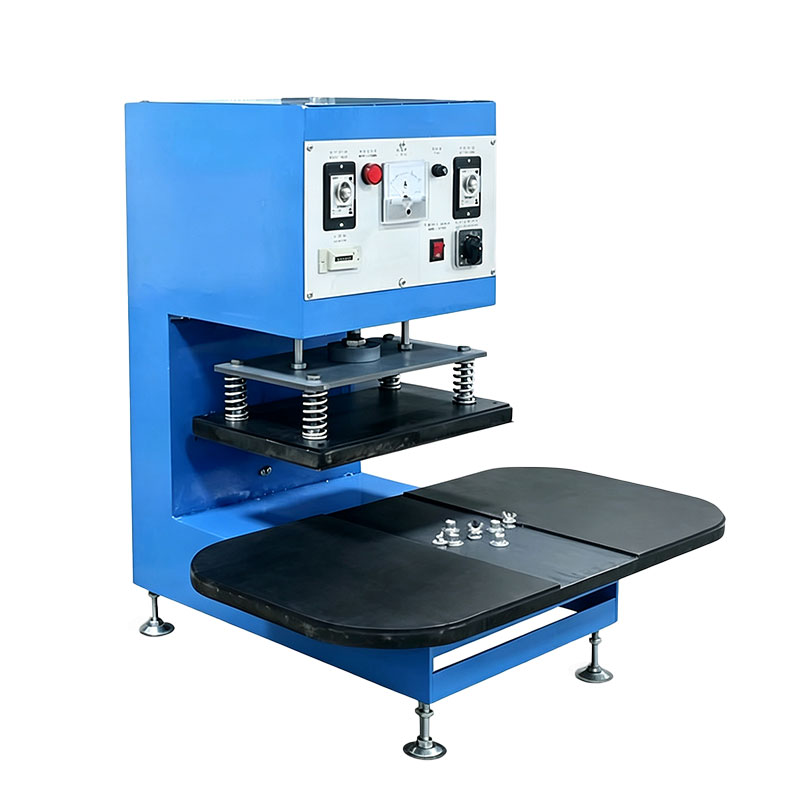
High-Efficiency Pneumatic Blister-to-Card Sealing Solutions Streamline your retail packaging process with our Custom Semi-Automatic Blister Card Heat Sealing Machine. Engineered to perfectly bond transparent PVC/PET blisters to heat-seal coated cardboard, this machine delivers consistent pneumatic pressure and precise temperature control. Available in rotary or sliding-table configurations, it allows operators to maximize output while ensuring a flawless, tamper-evident, and visually appealing seal for toys, hardware, cosmetics, and daily consumer goods.
Inquiry Email: sales@blisspak.com
Custom Semi-Automatic Blister Card Heat Sealing Machine Details
Elevating Retail Presentation with Flawless Sealing
In the competitive retail environment, "blister-to-card" packaging is essential. It provides product visibility, deters theft, and offers ample billboard space on the cardboard for branding and instructions. However, achieving a perfect, wrinkle-free seal that doesn't scorch the paper or crush the plastic requires precise mechanical control.
Our Custom Semi-Automatic Blister Card Heat Sealing Machine bridges the gap between manual labor and fully automated lines. It is designed for maximum versatility, allowing packaging facilities to rapidly switch between different product runs by simply swapping the custom sealing molds. By automating the critical heat and pressure application, this machine guarantees uniform seal strength and a premium finish on every single package.
Core Product Advantages
Precision Pneumatic System: Unlike manual hand-press machines that rely on operator strength, our machine utilizes an industrial-grade pneumatic cylinder. This ensures that the exact same pressure is applied evenly across the entire sealing area, eliminating weak spots and unsealed corners.
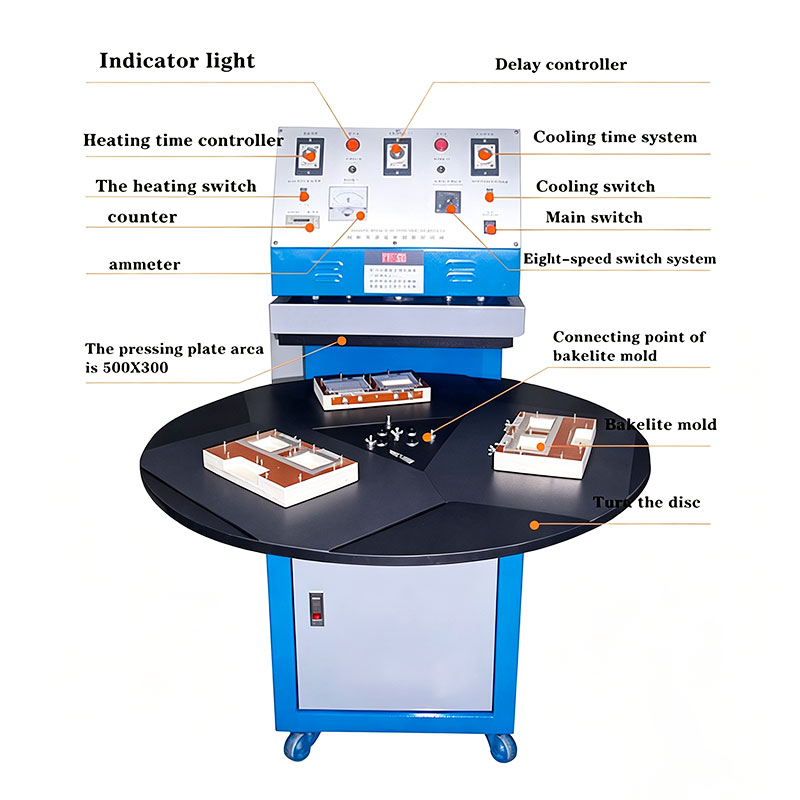
Intelligent Thermal Control: Equipped with solid-state digital temperature controllers and a high-efficiency heating platen. It provides rapid heat-up times and maintains stable temperatures to securely melt the blister coating on the card without warping the plastic blister.
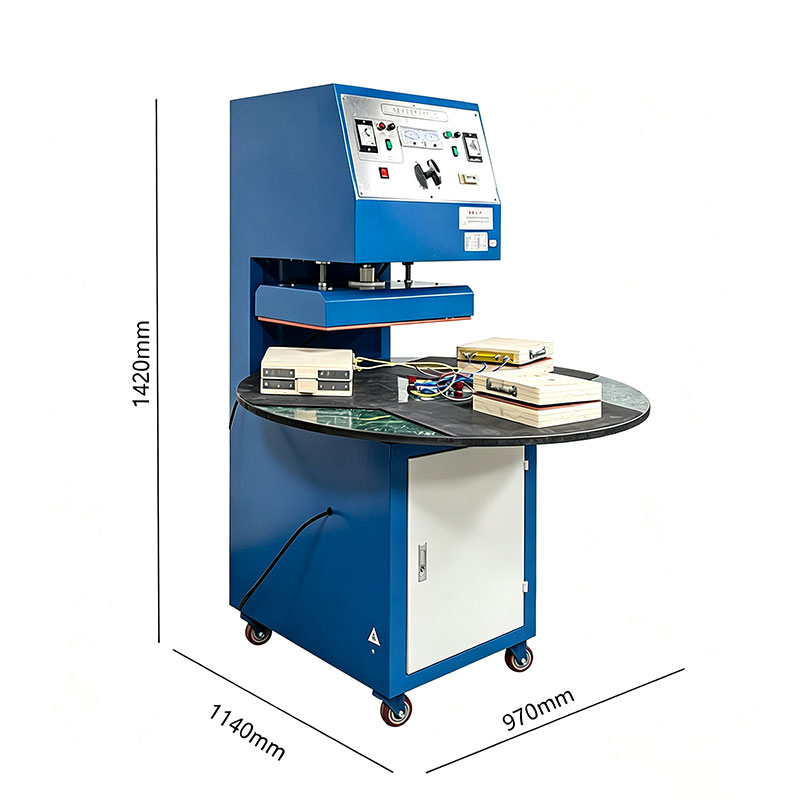
Multi-Station Efficiency: Available with customized sliding shuttle tables or multi-station rotary turntables (2, 3, or 4 stations). This allows the operator to load components (blister, product, card) into one station while the machine is actively sealing another, drastically increasing hourly throughput.
Custom Tooling & Fixtures: The sealing quality heavily relies on the holding fixture. We design and CNC-machine high-precision Bakelite or Aluminum molds customized exactly to the 3D contours of your specific blisters.、
Technical Specifications
Machine Type: Semi-automatic pneumatic heat pressure sealer
Operation Modes: Sliding shuttle table or Rotary turntable (customizable stations)
Sealing Area: Typically 300x500mm, 500x800mm (Customizable to fit multiple blisters per cycle)
Power Supply: 220V or 380V, 50/60Hz, Single or 3-Phase
Air Pressure Required: 0.4 - 0.6 MPa (Requires connection to an external air compressor)
Temperature Range: 0°C to 300°C (Digitally adjustable based on material thickness)
Adjustable Dwell Time: 0 to 10 seconds (Timer-controlled sealing duration)
Applicable Materials: PVC, PET, or PETG plastic blisters sealing to blister-coated cardboard cards
The BlissPak Turnkey Synergy
The frustration of blister packaging often comes from misaligned supply chains: the plastic rolls don't form well, the cardboard lacks proper coating, or the sealing molds don't fit the machine perfectly. BlissPak eliminates these variables.
As a true turnkey provider, we supply the Rigid Plastic Sheets (PVC/PET), manufacture the Vacuum Forming Machines to shape the blisters, CNC-machine the precise Sealing Molds, and deliver the Blister Card Heat Sealing Machine. By sourcing your entire ecosystem from us, you guarantee that the plastic chemistry, the mold dimensions, and the machine's thermal parameters are perfectly synchronized for plug-and-play production.
Frequently Asked Questions (FAQs)
Q1: What materials are actually required to create this packaging?
To successfully seal a blister to a card, you need three components:
- The formed plastic blister (usually PVC or PET).
- The product being packaged.
- A printed cardboard card that has been pre-treated with a specialized "Blister Varnish" (heat-seal lacquer). The machine applies heat to melt this varnish, bonding the paper to the plastic.
Q2: Does this machine also form the plastic blisters?
No. This machine is strictly a sealing unit. To create the actual 3D plastic blisters from flat plastic rolls, you will need a separate Vacuum Forming Machine, which BlissPak also engineers and supplies.
Q3: How do I choose between a sliding table and a rotary table model?
A sliding table (shuttle) model is highly compact and ideal for single-operator setups handling small to medium production runs. A rotary turntable (3 or 4 stations) allows multiple operators to stand around the machine (e.g., one person loading blisters, another loading the product, another placing the cards), which significantly maximizes high-volume production speed.
Q4: Why are my current blister cards burning or failing to stick together?
This is typically caused by a mismatch in three variables: Temperature, Pressure, and Dwell Time (how long the heat is applied). Our machine's digital controls allow you to fine-tune these exact parameters. Alternatively, the issue might lie in poor-quality blister varnish on your cardboard, which fails to activate properly under heat.
Q5: Can you provide the sealing molds for our specific products?
Absolutely. We offer complete custom tooling services. You simply send us your 3D design files, the physical product, or the formed blister, and our engineers will CNC-machine the precise Bakelite (phenolic resin) or aluminum nesting fixtures required for your exact packaging.

1. Why should we purchase blister packing and sealing machinery from Blisspak instead of going directly to a machinery manufacturer?
A: As industry veterans with years of expertise in the blister packaging sector, we possess a profound understanding of forming and sealing processes, the physical properties of various substrates (such as PVC, PET, and aluminum foil), and high-precision mold design. While we do not directly manufacture the physical hardware, we have deeply integrated China’s most professional and top-tier blister machinery suppliers. This allows us to stand completely on your side, leveraging our multi-vendor supply chain to deliver tailored, optimized, and comprehensive production line solutions that match your specific requirements (such as food airtightness, pharmaceutical sterility, or irregular hardware packaging)—saving you from the high communication costs and rigid configurations associated with dealing with a single traditional factory.
2. What industry background and successful partnership experience does Blisspak have in this field?
A: To date, Blisspak has successfully supplied advanced blister packaging and sealing machinery to numerous stationery corporations, cosmetics brands, food processing plants, and medical device enterprises worldwide, building a proven track record of cross-industry implementation. Thanks to our long-term cultivation of the entire supply chain, we have established exclusive strategic alliances with multiple leading domestic manufacturers. Because of our continuous and centralized purchasing volume, the wholesale channel pricing we secure from these factories is significantly lower than the standard quotes given to individual overseas buyers, ensuring that we deliver expert-level equipment selection and premium quality while passing substantial cost advantages directly to you.
3. With so many machinery models on the market, how does Blisspak guarantee that the recommended equipment is the best fit for us?
A: We never blindly push a specific standard machine; instead, our engineering team conducts a meticulous cross-reference within our vetted supplier database based strictly on your primary production data—including 3D product dimensions, packaging materials, target output (PPM), budget constraints, and workshop floor layout. By optimizing technical specifications and cost structures across the supply chain, we precisely match and configure the most reliable, efficient, and cost-effective equipment for your specific application, ensuring seamless machine-to-product compatibility while eliminating any risk of capacity bottlenecks or resource waste.
4. If we change our product dimensions or packaging materials in the future, can the machinery adapt? How will future tooling be handled?
A: Multi-functionality and high operational flexibility are always our top priorities when customizing equipment with our partner factories. The blister packing and sealing machines we recommend feature a toolless, quick-changeover design, allowing non-specialized operators to switch product specifications within minutes to adapt easily to varying materials and sizes. Furthermore, backed by our robust in-house mold design and fabrication capabilities, whenever you develop a new product, you simply need to send us the samples or drawings; we will precision-engineer the compatible high-accuracy forming or sealing molds to ensure a perfect fit with your existing machine, providing you with lifelong, hassle-free tooling support.
5. As an equipment integrator, how does Blisspak guarantee cross-border quality control (QC) and after-sales technical support?
A: Before any equipment is packed for international shipment, our professional engineers personally conduct a rigorous Factory Acceptance Test (FAT) at the manufacturing facility, running continuous full-load production trials using your exact target packaging materials to guarantee that temperature, pressure, and sealing integrity are 100% compliant, backed by comprehensive video documentation. Post-delivery, we serve as your single point of contact for all after-sales needs, providing industry-standard warranties on core components. You will never have to navigate complicated communication barriers with individual factories; Blisspak's English-speaking technical support team responds immediately via remote video guidance, circuit schematic analysis, and expedited global parts shipping to completely eliminate your cross-border maintenance concerns.