
Perfume Blister Trays
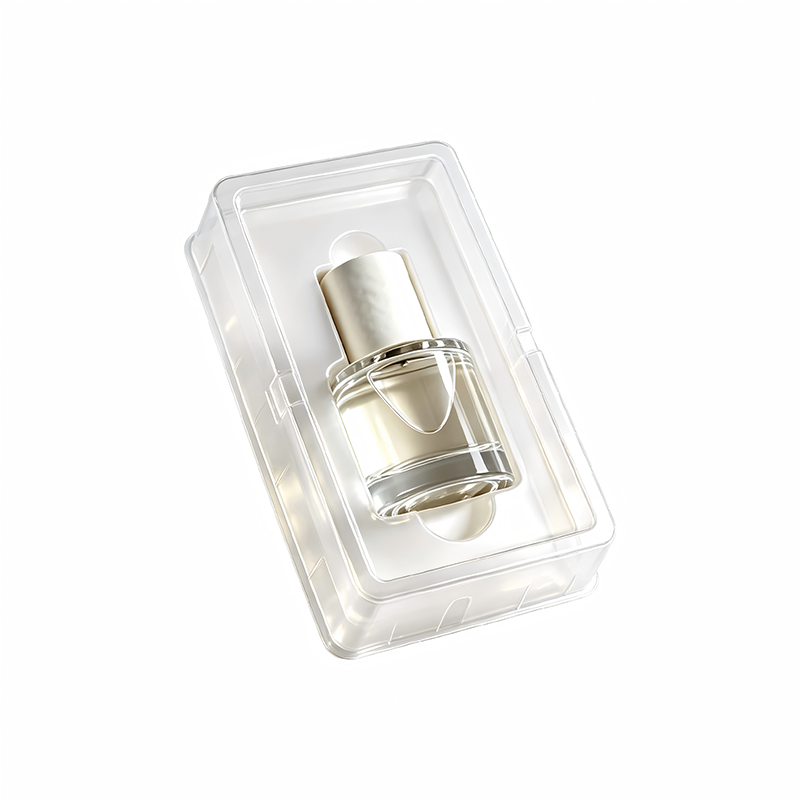
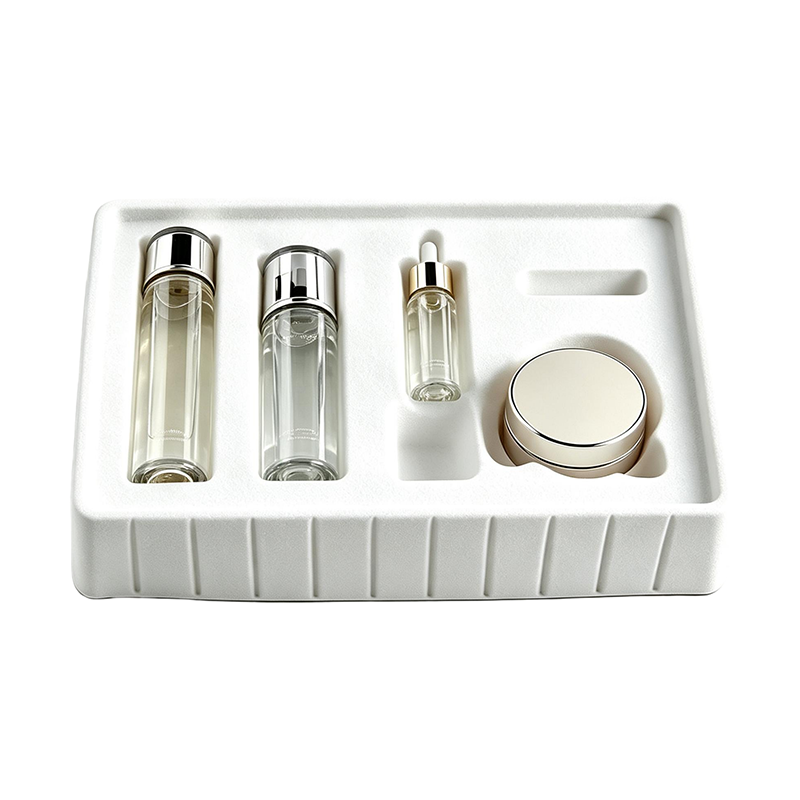
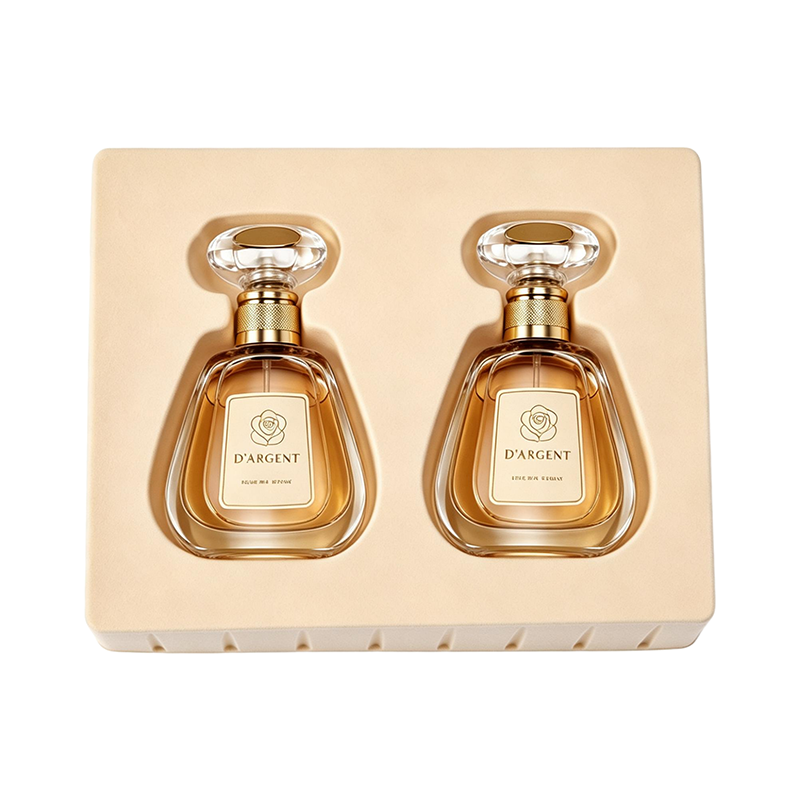
At BlissPak, our custom perfume blister trays are designed to protect that experience from the first impression to the final spritz. Precision thermoformed to fit your bottles, caps, sample vials, and gift sets, each tray delivers a secure, elegant hold that minimizes movement and protects delicate glass during shipping and display. Choose from a range of materials, colors, and finishes - including clear PET, PVC, and eco-friendly rPET - to create a packaging solution that reflects your brand's quality. With fast prototyping, reliable bulk production, and attention to every detail, BlissPak helps your fragrance stand out on the shelf and arrive flawless in your customer's hands. Contact us today to request a custom quote.


Perfume Blister Trays FAQs
You may want to know about Perfume Blister Trays
1. Thermoforming: The Core Process Behind Perfume Blister Trays
Perfume blister trays are produced through vacuum thermoforming. Plastic sheet is heated until soft, then drawn onto a custom mold using vacuum pressure. After cooling, the tray is demolded and trimmed to its final shape.
Key advantages of this process:
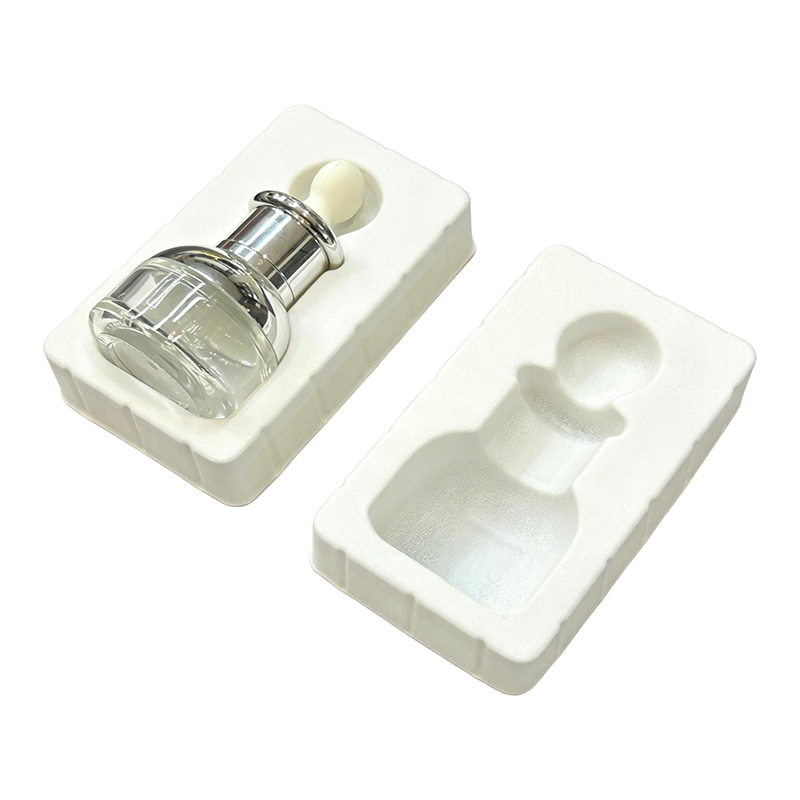
- 1:1 precision fit – Molded directly from your bottle's 3D data, ensuring zero movement and zero friction during transit.
- Thin-wall design – Reduces material usage while maintaining structural strength, lowering storage and shipping costs.
- Multi-functional cavities – Bottle cavities, cap locks, and leaflet slots can be formed in a single piece.
The full production flow includes: sheet heating → vacuum forming → cooling & demolding → die cutting → finishing (optional) → full inspection & packing. The forming stage is the most critical for yield rate.
2. Draft Angles: The Overlooked Precision Factor
Draft angles in mold design determine whether the tray demolds smoothly and how securely the bottle sits in its cavity. If the angle is too small, demolding becomes difficult and may scratch the product. If it is too large, cavity grip and space efficiency are reduced.
For thermoformed trays, draft angles typically range from 0.5° to 2°, adjusted according to product shape and material shrinkage. For perfume bottles with curved or irregular shapes, BlissPak’s engineering team validates fit and handling with 3D-printed functional prototypes before cutting the production mold.
3. Material Selection Matrix: Matching Trays to Perfume Products
| Material | Characteristics | Best For | Notes |
|---|---|---|---|
| PET | High stiffness, high clarity, recyclable | Mid-to-high-end bottles, sample vials | Ensure sufficient thickness; thin PET has poor load-bearing capacity |
| PETG | Excellent toughness, impact resistant | Heavy glass bottles, irregular shapes | Higher cost, but significantly better protection |
| RPET | Made from recycled content, eco-friendly | Brands with sustainability goals | Slightly lower clarity than virgin PET |
| PVC | Low cost, flexible | Lightweight samples, travel sizes | Avoid for low-temperature environments and high-end eco projects |
| PS | High stiffness, low cost, easy to form | Simple shapes, lightweight items | Brittle and impact-sensitive; not ideal as primary cushioning |
For glass perfume bottles, PETG or thicker PET is strongly recommended. Glass is heavy and must withstand vertical compression and horizontal impact during shipping.
4. Quality Control: Full-Line Inspection from Raw Material to Finished Tray
Professional blister tray manufacturing requires quality control throughout the entire process, not just final random inspection. BlissPak’s QC checkpoints include:
- Incoming material inspection – Thickness, tensile strength, and clarity tested for every sheet batch.
- First-article approval – The first molded piece is measured against the design drawing using CMM (coordinate measuring machine).
- In-line patrol inspection – Continuous sampling for color, wall thickness, and cavity consistency.
- Finished product functional testing – Simulated transport vibration, drop tests, and full assembly trials with the final outer box.
5. Sustainability Trends: The Inevitable Direction for Perfume Packaging
Brand demand for eco-friendly blister materials is growing rapidly. RPET (recycled PET) is becoming a mainstream choice for premium cosmetic packaging due to its high clarity, recyclability, and good stiffness. PET and RPET typically carry the #1 recycling symbol and are accepted by most recycling programs in North America, Europe, and Asia.
For perfume brands with carbon-reduction goals, BlissPak also offers PLA (polylactic acid) biodegradable options that maintain protection performance while reducing environmental footprint.
Additional FAQs
Q1: How do I choose the right material thickness? Is thicker always better?
Not necessarily. Thickness should match product weight and shipping conditions. For standard 50ml–100ml glass perfume bottles, PET is typically 0.4–0.6mm, while PETG can be slightly thinner. The key indicators are not just thickness but also material resilience and stress relaxation resistance - whether the tray returns to shape after long-term loading and whether the cavity remains tight. BlissPak provides 72-hour constant-pressure deformation data during sampling to support accurate decisions.
Q2: Perfume bottles are glass. How do you ensure they won’t break during shipping?
Glass perfume bottle protection involves three layers: cavity precision prevents movement, material toughness absorbs impact energy, and structural design distributes stacking pressure. BlissPak recommends PETG or thickened PET, with buffer ribs designed into the cavity bottom and bottle contact areas. Optional EPE foam or velvet inserts provide additional cushioning. All solutions are validated through simulated transport vibration tests.
Q3: What is your mold precision? How is it different from standard trays?
BlissPak’s mold processing precision is controlled within ±0.1mm. This matters because perfume bottles often have heavy glass bodies and delicate caps. Excessive cavity tolerance causes micro-movement during transit, and long-term friction can damage bottle coatings or silk-screen printing. High-precision molds also ensure consistent spacing between multiple bottle positions, creating a neat and attractive unboxing presentation.
Q4: How long does it take from providing my product to receiving a sample?
Standard timeline: 3D design confirmation (3–5 days) → 3D-printed functional prototype validation (2–3 days) → production mold development (5–7 days) → trial sample production (3–5 days). If you provide precise 3D files (STEP/IGS format), the total sampling period can be controlled within 2–3 weeks. If a similar mold already exists at the design stage, the timeline can be shortened further.
Q5: Do you support eco-friendly recyclable materials? How much more do they cost?
Yes. BlissPak offers RPET, PLA biodegradable materials, and pulp molding options. RPET costs roughly the same as virgin PET or 5%–10% more. PLA is more expensive but compostable. For brands with ESG goals, RPET is currently the most cost-effective eco-friendly choice, with clear recycling labeling that supports sustainability claims on packaging.
Q6: How do you ensure color and clarity consistency across bulk production batches?
Color and clarity consistency depend on raw material batch control and stable forming process parameters. BlissPak performs incoming color-difference inspection on every sheet batch, uses an in-line vision system during production to monitor appearance, and conducts AQL-based sampling on finished goods. For brands with special color requirements (e.g., translucent tinted trays), a standard color chip is retained and batch sample comparison is established.