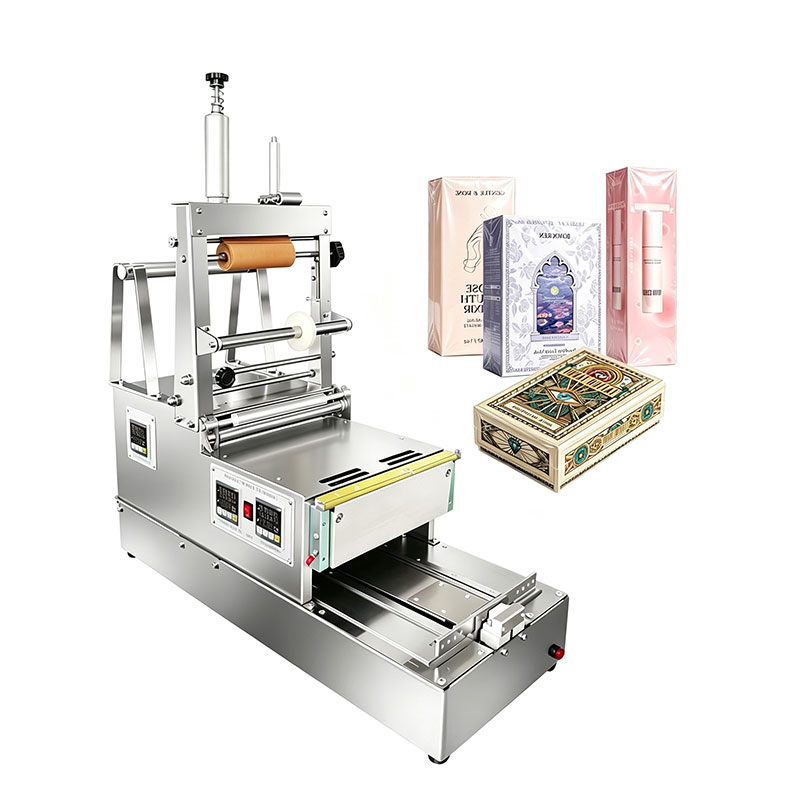
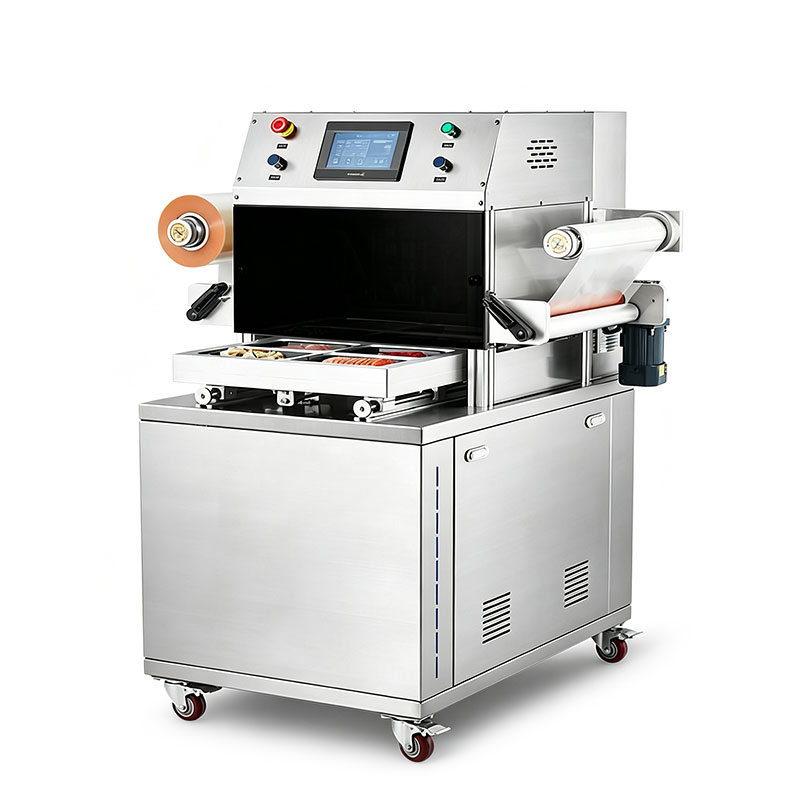
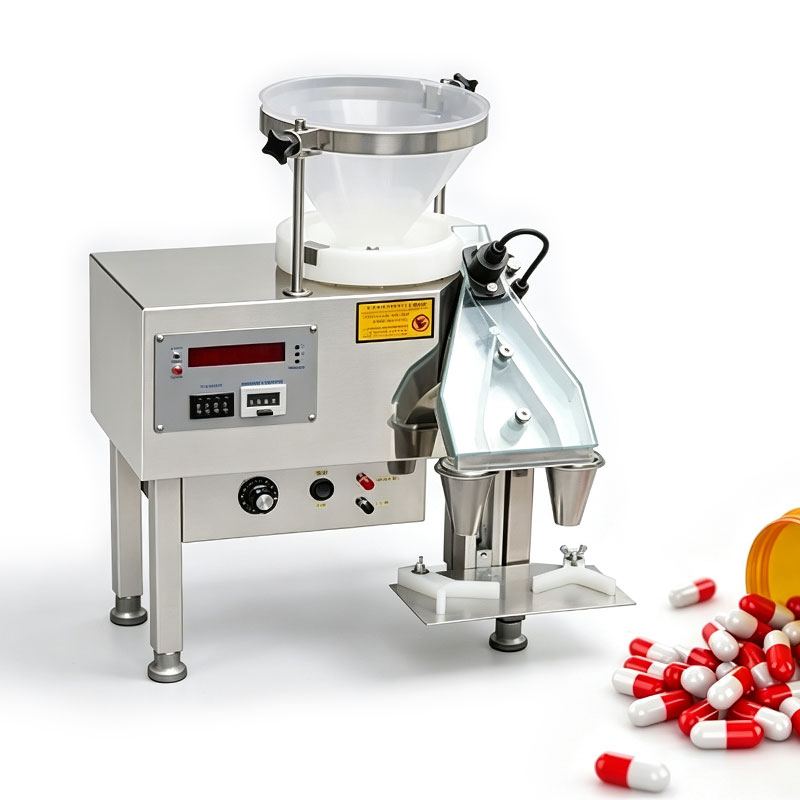
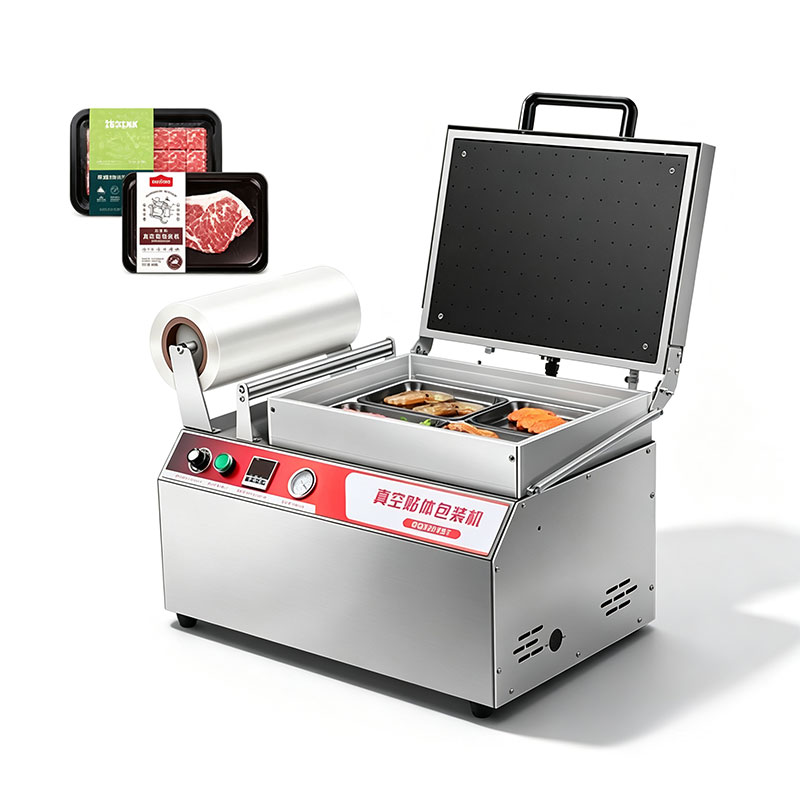
Semi-Automatic Vertical Modified Atmosphere Packaging (MAP) Machine
Product Overview:
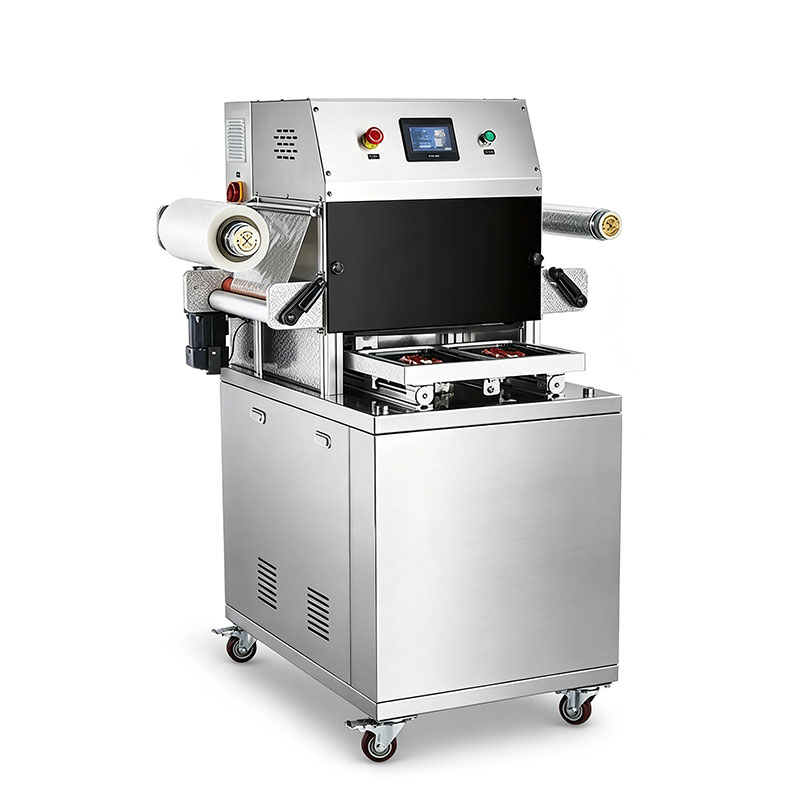
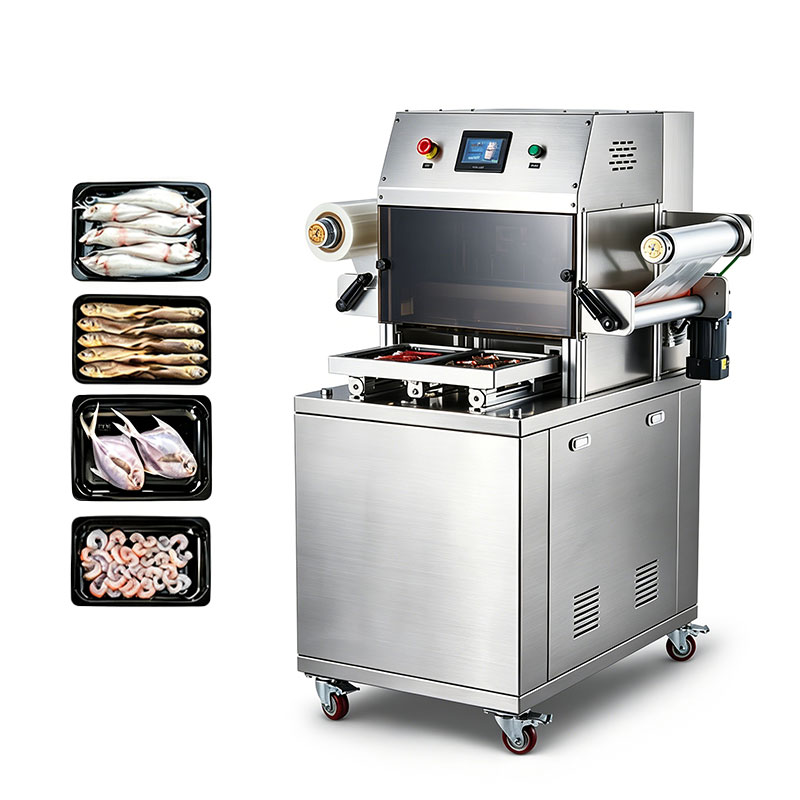
A vertical cabinet-type packaging machine engineered for deep vacuum extraction and hermetic sealing of pre-formed food trays. The machine automatically executes air evacuation (vacuum), thermal heat sealing, and precise film contour trimming in a single continuous cycle. Constructed with a food-grade SUS304 stainless steel frame and a programmable PLC control system, it provides a stable, low-maintenance, and cost-effective vacuum packaging solution for food workshops, and catering businesses.
Inquiry Email: sales@blisspak.com
Semi-Automatic Vertical Modified Atmosphere Packaging (MAP) Machine Details
The Blisspak Automatic Vertical Tray Vacuum Sealing Machine is specifically designed to extract air from rigid trays before sealing to extend product shelf life and prevent oxidation. The machine features a compact vertical chamber structure.
Once the operator places the pre-filled trays into the lower mold and slides it in, the upper chamber closes to form an airtight seal. The integrated industrial vacuum pump then rapidly evacuates the air from the container. Immediately following the vacuum stroke, the machine applies regulated thermal pressure to bond the barrier film to the tray rim and trims the excess film along the contour, delivering a professionally finished vacuum package.
Applications
Fresh and Processed Meats: Vacuum packaging of beef, pork, poultry, and cold cuts to minimize bacterial contact and slow down spoilage during cold chain transit.
Seafood and Frozen Fish: Sealing of fresh fish fillets, shrimp, and shellfish to prevent freezer burn and preserve moisture.
Ready-to-Eat (RTE) Meals: Packaging of pre-cooked dishes, rice trays, and bento boxes for central kitchens distributing to retail networks.
Bean Products and Pickles: Vacuum sealing of tofu, dried bean curd, and pickled vegetables to ensure leak-proof distribution.
Core Features
High-Efficiency Air Evacuation (Vacuum)
Equipped with a heavy-duty industrial vacuum pump that delivers fast air displacement from the sealing chamber, achieving a high vacuum level to protect products against aerobic spoilage.
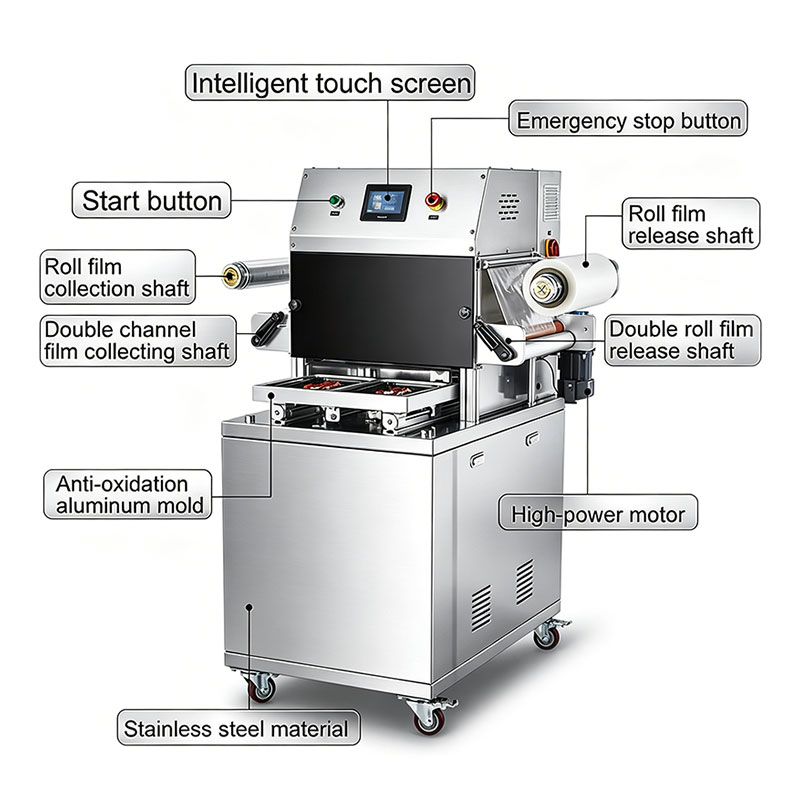
PLC Control with Touchscreen HMI
All key operational variables—including vacuum holding time, heat sealing duration, and sealing temperature—are managed via a centralized PLC and configured easily through a digital touchscreen interface.
Interchangeable Aluminum Mold Matrix
Features a modular tooling system that allows the machine to accommodate different tray shapes and dimensions. The CNC-machined aluminum molds can be swapped manually to meet varied daily production demands.
Automatic Film Tracking and Contour Trimming
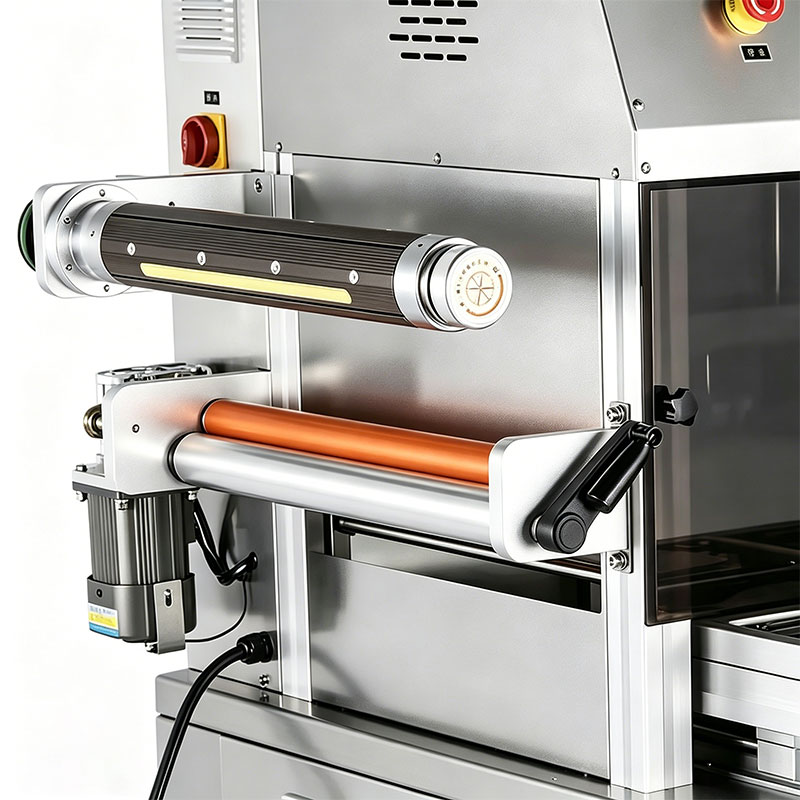
Utilizes a sensitive photoelectric eye-mark sensor to accurately align printed or clear sealing films. The integrated pneumatic cutter trims the film precisely along the outer edge of the tray, leaving a clean retail finish.
PID Digital Temperature Control
The heating elements are governed by independent digital PID temperature controllers, ensuring stable and uniform heat distribution across the sealing plate to prevent micro-leaks.
Stainless Steel Construction
The main chassis, vacuum chamber housing, and structural plates are constructed from SUS304 stainless steel to meet global food safety standards and withstand daily wipe-down cleaning.

1. Why should we purchase blister packing and sealing machinery from Blisspak instead of going directly to a machinery manufacturer?
A: As industry veterans with years of expertise in the blister packaging sector, we possess a profound understanding of forming and sealing processes, the physical properties of various substrates (such as PVC, PET, and aluminum foil), and high-precision mold design. While we do not directly manufacture the physical hardware, we have deeply integrated China’s most professional and top-tier blister machinery suppliers. This allows us to stand completely on your side, leveraging our multi-vendor supply chain to deliver tailored, optimized, and comprehensive production line solutions that match your specific requirements (such as food airtightness, pharmaceutical sterility, or irregular hardware packaging)—saving you from the high communication costs and rigid configurations associated with dealing with a single traditional factory.
2. What industry background and successful partnership experience does Blisspak have in this field?
A: To date, Blisspak has successfully supplied advanced blister packaging and sealing machinery to numerous stationery corporations, cosmetics brands, food processing plants, and medical device enterprises worldwide, building a proven track record of cross-industry implementation. Thanks to our long-term cultivation of the entire supply chain, we have established exclusive strategic alliances with multiple leading domestic manufacturers. Because of our continuous and centralized purchasing volume, the wholesale channel pricing we secure from these factories is significantly lower than the standard quotes given to individual overseas buyers, ensuring that we deliver expert-level equipment selection and premium quality while passing substantial cost advantages directly to you.
3. With so many machinery models on the market, how does Blisspak guarantee that the recommended equipment is the best fit for us?
A: We never blindly push a specific standard machine; instead, our engineering team conducts a meticulous cross-reference within our vetted supplier database based strictly on your primary production data—including 3D product dimensions, packaging materials, target output (PPM), budget constraints, and workshop floor layout. By optimizing technical specifications and cost structures across the supply chain, we precisely match and configure the most reliable, efficient, and cost-effective equipment for your specific application, ensuring seamless machine-to-product compatibility while eliminating any risk of capacity bottlenecks or resource waste.
4. If we change our product dimensions or packaging materials in the future, can the machinery adapt? How will future tooling be handled?
A: Multi-functionality and high operational flexibility are always our top priorities when customizing equipment with our partner factories. The blister packing and sealing machines we recommend feature a toolless, quick-changeover design, allowing non-specialized operators to switch product specifications within minutes to adapt easily to varying materials and sizes. Furthermore, backed by our robust in-house mold design and fabrication capabilities, whenever you develop a new product, you simply need to send us the samples or drawings; we will precision-engineer the compatible high-accuracy forming or sealing molds to ensure a perfect fit with your existing machine, providing you with lifelong, hassle-free tooling support.
5. As an equipment integrator, how does Blisspak guarantee cross-border quality control (QC) and after-sales technical support?
A: Before any equipment is packed for international shipment, our professional engineers personally conduct a rigorous Factory Acceptance Test (FAT) at the manufacturing facility, running continuous full-load production trials using your exact target packaging materials to guarantee that temperature, pressure, and sealing integrity are 100% compliant, backed by comprehensive video documentation. Post-delivery, we serve as your single point of contact for all after-sales needs, providing industry-standard warranties on core components. You will never have to navigate complicated communication barriers with individual factories; Blisspak's English-speaking technical support team responds immediately via remote video guidance, circuit schematic analysis, and expedited global parts shipping to completely eliminate your cross-border maintenance concerns.