
Phone: +86 15398058207
E-mail: sales@blisspak.com
Add: Room 603 Building C, The Huixin Center, Zhangba One Road, Yanta Zone, Xi'an City, Shaanxi Province, China
Restaurant Packaging Trends
Restaurant packaging has evolved far beyond simple takeaway containers. In today's highly competitive foodservice market, packaging plays critical role in food safety, customer experience, branding, sustainability, and operational efficiency.
With the rapid growth of food delivery and takeaway services, restaurants are now investing heavily in packaging solutions that not only protect food—but also strengthen brand identity and improve customer satisfaction.
So, what defines modern restaurant packaging, and where is the industry heading?
What Is Restaurant Packaging
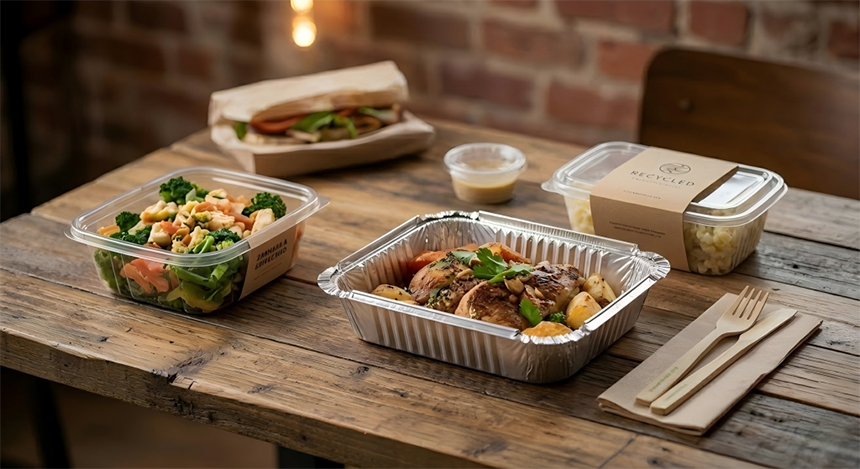
Restaurant packaging refers to the containers, trays, cups, wraps, lids, and bags used to store, transport, and serve food products.
These packaging solutions are designed to:
Maintain food quality and temperature
Prevent leakage and contamination
Improve portability and convenience
Enhance presentation and branding
Modern restaurant packaging must balance functionality with cost efficiency while meeting increasing consumer expectations for sustainability.
Why Restaurant Packaging Has Become So Important
In the modern food service landscape, the dramatic rise of food delivery platforms, takeout dining, meal prep services, and cloud kitchens has officially transformed packaging from a secondary consideration into a core business strategy. A container is the final touchpoint of the consumer experience. While poor packaging can lead to costly food spills, temperature loss, damaged presentation, and negative customer reviews, implementing high-quality packaging improves customer perception and strengthens brand loyalty, directly driving repeat order volumes for scaling digital food brands.
Categorizing Mainstream Takeout Packaging Options
1. Sustainability Is Reshaping Restaurant Packaging
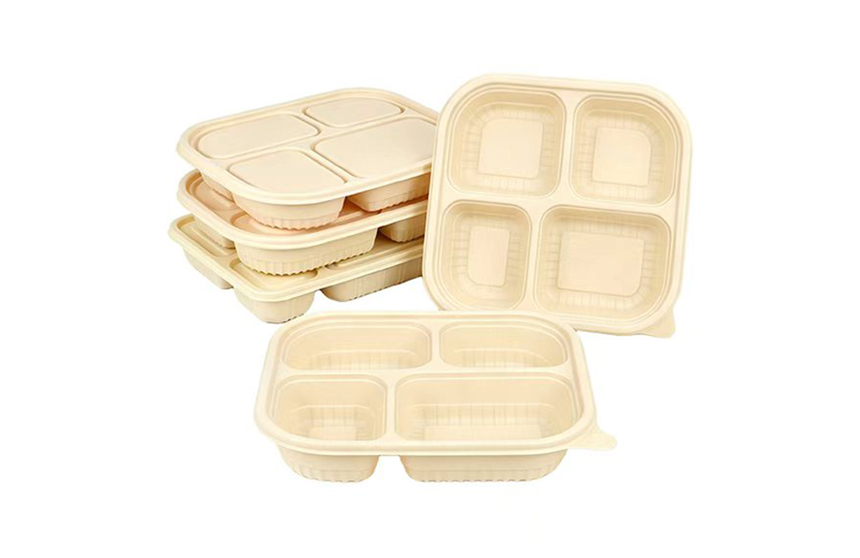
One of the biggest trends in restaurant packaging is the shift toward eco-friendly materials. Restaurants are increasingly adopting biodegradable containers, compostable tableware, recyclable paper packaging, aluminum foil alternatives, and plant-based materials such as cornstarch packaging. Modern consumers are paying closer attention to environmental impact. Because of this behavioral shift, many businesses now view sustainable packaging as both a branding opportunity and a competitive necessity to capture market share and foster deep consumer trust.
2. Functional Packaging Improves Food Delivery Performance
This has led to innovations such as
Leak-resistant lids
Ventilated containers for fried foods
Insulated takeaway solutions
Multi-compartment meal trays
The goal is to ensure that food arrives in the same condition as it left the kitchen.
For delivery-focused businesses, packaging performance directly affects customer satisfaction and repeat orders.
3. Aluminum Foil Containers Continue to Grow
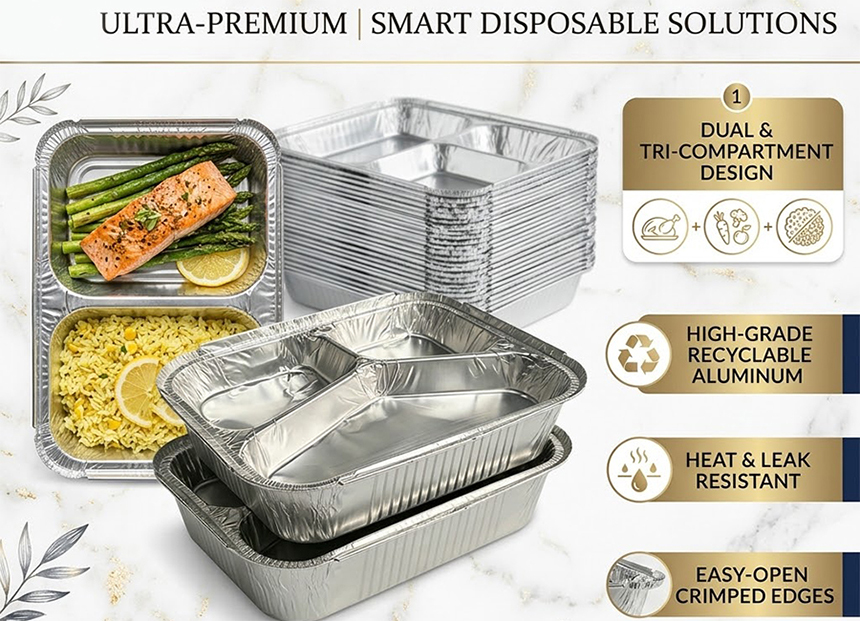
Aluminum foil containers remain highly popular in restaurant packaging because of their heat resistance, strong barrier protection, durability during transport, and compatibility with ovens and reheating. These robust performance traits ensure meal safety and presentation, explaining why they are widely used for takeaway meals, airline catering, meal prep services, baked dishes, and roasted foods. To meet diverse visual and mechanical demands, smooth-wall and wrinkle-wall foil trays are especially common in high-volume foodservice operations.
Consumer Convenience Drives Packaging Innovation
In a fast-paced market, convenience remains one of the biggest purchasing factors in foodservice packaging.
Popular features include:
Easy-open lids
Microwave-safe containers
Stackable packaging
Reclosable meal trays
Portion-controlled packaging
By focusing on human-centric engineering, we help commercial food brands deliver packaging that improves usability, which often leads to stronger customer satisfaction and repeat business.
How BlissPak Supports Modern Restaurant Packaging
In an era of rapid market shifts, rigid supply models are no longer sufficient to maintain an edge. As restaurant packaging demands continue to evolve, businesses need packaging partners capable of delivering flexibility, customization, reliable production capacity, and sustainable material options. At BlissPak, we have structured our factory-scale infrastructure to answer this exact industry mandate. By providing factory customization for trays, containers, and lids alongside precision mold and tooling development, we give brands the exact design freedom they require. Combined with our support for eco-friendly and recyclable materials and high-efficiency systems for bulk production and scalable manufacturing, we ensure robust supply security that allows scaling food service brands to grow with confidence.
Automation and Bulk Production Are Essential
As restaurant chains and food delivery networks scale, packaging suppliers must support:
High production consistency
Fast lead times
Large-volume manufacturing
Automated filling and sealing compatibility
At BlissPak, we combine advanced tooling and efficient manufacturing systems to support bulk production at scale, helping businesses maintain packaging consistency across growing operations.
Conclusion
Restaurant packaging has become a key factor in operational success, customer satisfaction, and brand positioning. As the foodservice industry continues to evolve, businesses that invest in smart, customized, and scalable packaging solutions will gain a significant competitive advantage.
With expertise in custom packaging development and large-scale production, BlissPak helps restaurants and food brands create packaging solutions designed for the future of modern foodservice.
Because great food deserves great packaging.



- Disposable sushi tray with lid wholesale
- Custom Disposable Plastic Cups with Logo
- Is blister packaging cheap?
- How to Make Your Own Blister Packaging?
- Advantages of Wine Vacuum Trays
- Custom Packaging Solutions for Precious Metal
- Why choose BlissPak for vacuum forming services?
- What Are The Five Modern Packaging Materials
- Why Bamboo Food Containers Are Better Than Plastic
- The Benefits of Bamboo Fiber Material Food Packaging