
Phone: +86 15398058207
E-mail: sales@blisspak.com
Add: Room 603 Building C, The Huixin Center, Zhangba One Road, Yanta Zone, Xi'an City, Shaanxi Province, China
The Benefits of Bamboo Fiber Material Food Packaging
As businesses and consumers become increasingly concerned about plastic waste and environmental sustainability, the food packaging industry is undergoing a major transformation. Brands are actively searching for packaging materials that can provide reliable performance while reducing dependence on conventional petroleum-based plastics.
Among the growing range of sustainable packaging materials, bamboo fiber food packaging has attracted increasing attention. Made from a rapidly renewable plant resource, bamboo fiber can be processed into food containers, trays, bowls, plates, and other foodservice packaging products.
But what exactly is bamboo fiber packaging, and what makes it an attractive option for modern food businesses?
In this article, we explore the key benefits, applications, material characteristics, and considerations of bamboo fiber food packaging.
What Is Bamboo Fiber Food Packaging
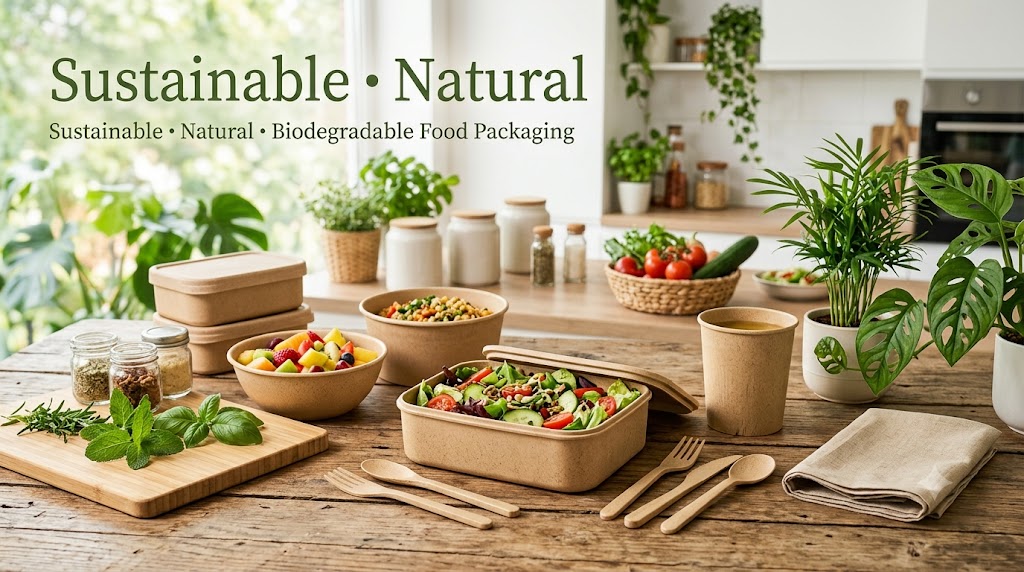
Bamboo fiber food packaging is produced by processing bamboo into fiber or pulp and then forming it into different packaging products. Derived from a rapidly renewable, plant-based resource that grows rapidly in suitable cultivation regions without relying on finite petroleum reserves, bamboo fiber stands out as a highly compelling alternative for eco-conscious enterprises exploring sustainable packaging innovation. Through advanced manufacturing processes and tailored material formulations, BlissPak leverages this high-performance natural fiber to manufacture an extensive suite of versatile tableware and food-grade packaging solutions—including food containers, takeaway boxes, specialized lunch boxes, plates, bowls, food trays, beverage cups, and single-use dining utensils. Compared to conventional petroleum-derived plastics, bamboo fiber packaging dramatically reduces carbon footprint while offering exceptional structural durability and an elevated natural aesthetic, making it the ideal choice for brands aiming to lead the shift toward eco-friendly, circular packaging solutions.
Key Bamboo Fiber Packaging Benefits
1. A More Sustainable Alternative for Foodservice
As one of the largest global consumers of disposable packaging, the foodservice sector—spanning restaurants, cafés, commercial catering firms, takeaway outlets, and food delivery platforms—demands vast quantities of containers and tableware daily to sustain seamless operations. Driven by evolving environmental regulations and shifting consumer expectations regarding single-use plastics, forward-thinking businesses are actively transitioning toward renewable, plant-based alternatives to safeguard their market positioning.
To support this industry-wide shift, BlissPak provides versatile bamboo fiber packaging tailored for a wide array of demanding applications—including hot takeaway meals, large-scale catering services, doorstep food deliveries, fresh bakery items, ready-to-eat convenience foods, outdoor festivals, and corporate dining. By adopting these high-performance, plant-derived packaging solutions, brands can drastically cut their plastic reliance, authenticating their sustainability messaging while making a powerful, memorable impression on eco-conscious consumers.
2. Lightweight Yet Functional
Bamboo fiber packaging can offer a useful combination of lightweight construction and structural rigidity. When properly designed and manufactured, fiber-based food containers can provide sufficient strength for many everyday foodservice applications.
This engineered durability is particularly vital in the fast-paced takeaway and delivery sector, where containers must reliably endure the mechanical stresses of high-volume food filling, multi-layer stacking, prolonged transit, active handling, and short-term holding.
3. Bamboo Fiber Packaging and Food Safety
Food contact safety is a critical consideration for any packaging material.
Bamboo fiber packaging intended for food applications should be manufactured using appropriate raw materials and comply with the relevant food-contact regulations in the target market. When sourcing sustainable food packaging, forward-thinking buyers must look beyond generic marketing labels like "natural" or "eco-friendly" and evaluate the packaging system in its entirety to ensure absolute suitability for their specific applications. A comprehensive evaluation requires verifying critical performance and safety parameters—including rigorous food-contact regulatory compliance, precise raw material composition, standardized factory manufacturing protocols, functional coatings or additives, temperature tolerance ranges, and intended culinary applications.
How BlissPak Supports Sustainable Packaging Development
At BlissPak, we understand that modern food businesses are looking for packaging solutions that balance performance, cost, branding, and sustainability.
To help brands elevate their market presence, BlissPak offers end-to-end customizable manufacturing capabilities - spanning bespoke packaging development, strategic material selection, custom structural engineering, scalable OEM and ODM services, stringent multi-stage quality control, and large-volume bulk production capacity. For forward-thinking businesses exploring bamboo fiber, sugarcane bagasse, certified biodegradable materials, or other alternative eco-friendly substrates, we collaborate closely with you to analyze, test, and optimize the ideal packaging structure for your specific operational demands and regional market standards. Moving far beyond generic off-the-shelf options, BlissPak empowers you to co-create purpose-built, high-performance packaging solutions that seamlessly align with your product characteristics, streamline supply chain logistics, and advance your long-term sustainability objectives.
Conclusion
Bamboo fiber food packaging offers an interesting combination of renewable raw materials, functional performance, and sustainability potential. From takeaway containers and foodservice products to plates, bowls, and catering packaging, bamboo fiber can provide an alternative for businesses looking to explore plant-based packaging solutions.
However, sustainable packaging decisions should always consider the complete picture—from material sourcing and manufacturing to product performance and end-of-life disposal.
At BlissPak, we believe the future of packaging is about finding the right balance between functionality, sustainability, customization, and production efficiency.
Whether you are developing a new sustainable food packaging product or looking for a reliable manufacturing partner for custom packaging and bulk production, BlissPak is ready to help turn your packaging ideas into scalable solutions.



- Disposable sushi tray with lid wholesale
- Custom Disposable Plastic Cups with Logo
- Is blister packaging cheap?
- How to Make Your Own Blister Packaging?
- Advantages of Wine Vacuum Trays
- Custom Packaging Solutions for Precious Metal
- Why choose BlissPak for vacuum forming services?
- What Are The Five Modern Packaging Materials
- Why Bamboo Food Containers Are Better Than Plastic
- The Benefits of Bamboo Fiber Material Food Packaging