
Phone: +86 15398058207
E-mail: sales@blisspak.com
Add: Room 603 Building C, The Huixin Center, Zhangba One Road, Yanta Zone, Xi'an City, Shaanxi Province, China
What Is the Difference Between Blister and Strip Packaging
In the pharmaceutical and healthcare packaging industry, choosing the right primary packaging format is not just about appearance—it directly affects product protection, compliance, shelf life, dosing convenience, and production efficiency. Two of the most widely used formats are blister packaging and strip packaging.
Although they may look similar at first glance, these two packaging solutions are designed differently and serve different production and product needs. For pharma brands, nutraceutical companies, and healthcare manufacturers, understanding the difference is essential before moving into factory customization and bulk production. At BlissPak, we work with brands looking for custom pharmaceutical packaging solutions, helping them select the right format for both product safety and commercial scalability.

What Is Blister Packaging?
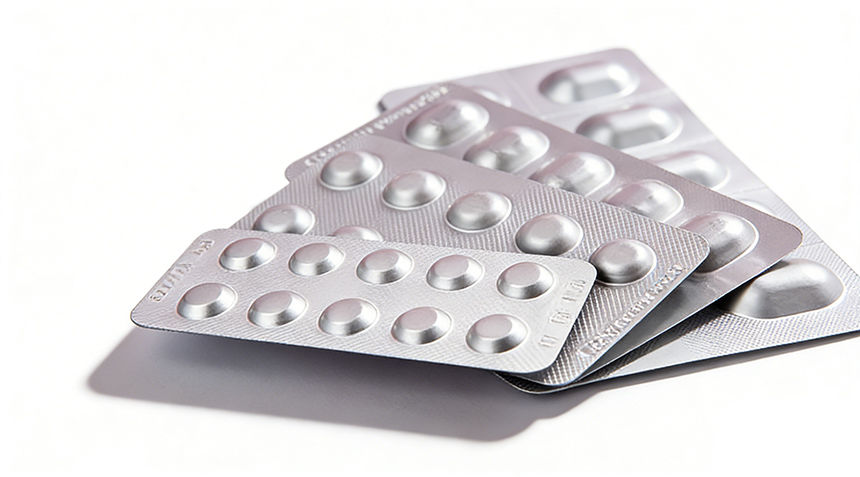
Blister packaging involves sealing tablets or capsules into individual pre-formed cavities, typically backed with foil. It is one of the most common packaging formats for pharmaceuticals and nutraceuticals, designed to protect medicines from moisture, light, and contamination. This format is commonly used for: tablets, capsules, softgels, lozenges, small healthcare or medical items.
Blister packs are valued for their ability to provide individual dose protection, high product visibility, and strong resistance to moisture, contamination, and handling damage. Industry sources note that blister packs are a preferred choice for pharmaceutical packaging due to their integration of product display, dose separation, and tamper-evident features in one cohesive format.

What Is Strip Packaging?
Strip packaging encloses tablets or capsules in a continuous row, sealed between foil and plastic layers for protection and easy dosing. In daily use, a consumer simply retrieves a vitamin strip, peels open a segment, and takes one dose—a level of convenience made possible by thoughtful design. Each tablet is shielded from moisture and light, while printed indicators or perforations enable accurate dose tracking. For manufacturers, strip packs offer fast production and precise handling, making them ideal for moisture-sensitive tablets and adherence-focused formulations. From vitamins and probiotics to over-the-counter medicines, strip packaging provides a safe, practical, and patient-friendly single-dose solution.
Unlike blister packs, strip packs typically do not feature rigid molded cavities. Instead, the product is enclosed in a flatter, more flexible sealed format, making strip packaging compact, lightweight, and often more cost-effective for high-volume production. Multiple industry sources describe strip packaging as particularly advantageous in applications where barrier protection, portability, and straightforward continuous sealing are key priorities.
Blister Packaging vs Strip Packaging: Key Differences
1. Packaging Structure
Blister Packaging: Features a pre-formed plastic cavity designed to hold the product, sealed with a lidding material. This configuration creates individual compartments for each dose, offering clear separation and reliable protection.
Strip Packaging: Employs two layers of material sealed directly around the product. This creates a flatter, more compact structure without distinct individual compartments—offering a streamlined design suited for high-density packaging.
2. Protection Performance
Blister Packaging: Blister packaging is preferred for its better protection and durability. Its rigid structure resists physical and crushing impacts. The plastic-foil or plastic-paperboard combination provides a strong barrier against light, moisture, and oxygen. As a result, medications in blister packaging can remain stable for 3–5 years longer than those in strip packaging.While blister packaging offers good defense against moisture and contamination, it may not perform as well as strip packaging in extreme conditions.
Strip Packaging: This packaging delivers exceptional resistance to moisture and light. The aluminum foil forms a robust barrier that maintains product integrity. However, the flexible strip construction can be more vulnerable to physical damage. Even so, most medications packaged in this format achieve a shelf life of 2 to 3 years.
3. Convenience for End Users
Blister packaging excels in dose organization and tracking. It enables clear separation of individual doses, supports adherence to scheduled medication—especially for elderly users—and provides easy visibility of remaining doses.
Strip packaging prioritizes portability and convenience. Its slim, lightweight design fits easily into bags or pockets, making it ideal for travel or everyday carry. Strip packs can also be quickly torn into individual portions, offering simple, tool-free access to single doses.
For products where medication adherence is important, blister packs are often preferred because they make it easier for patients to see whether a dose has already been taken. Strip packaging, however, is often valued for portability and convenience.
4. Cost and Production Efficiency
Strip uses 30-40% less material than blister packaging with lower raw material costs. Strip packaging production process is faster than blister packaging which further minimizes the manufacturing costs.
Blister packaging utilizes high-speed thermoforming technology, achieving production rates of 600–1,200 blisters per minute. Accurate temperature control (120–160°C) and forming pressure of 4–6 bar are essential for proper cavity formation. This thermodynamic efficiency reduces waste and maximizes material usage in high-volume drug manufacturing.
For businesses preparing for high-volume manufacturing, strip packaging may offer better economics depending on the product. But if your product needs stronger retail presentation, clearer dosage control, or a more premium medical look, blister packaging may justify the higher cost.
At BlissPak, we help clients balance unit economics, packaging performance, and production scale before finalizing a packaging format for factory runs.
How to Choose Between Blister Packaging and Strip Packaging?
There is no universal "best" packaging type. The right choice depends on your product and market strategy.
Choose Blister Packaging If You Need:
Better retail appearance
Strong dose separation
Higher physical protection
Premium custom packaging design
Brand-forward healthcare presentation
Choose Strip Packaging If You Need:
Lower packaging cost
High-speed production
Compact pack size
Efficient unit-dose output
Simpler packaging structure
For growing pharmaceutical brands, the smarter approach is not simply choosing the cheaper format—it is choosing the format that best matches your product stability requirements, compliance needs, logistics model, and customer experience goals.
Why Work with BlissPak for Custom Pharmaceutical Packaging?
BlissPak provides end-to-end expertise in custom blister packaging, specializing in high-performance structures for tablets, capsules, and healthcare products. Our factory-direct services encompass everything from technical structure consultation and material selection to precision mold development and large-scale bulk production.
Whether you are launching a new product or optimizing an existing line—including evaluating blister vs. strip packaging—our team delivers the manufacturing efficiency and quality control your brand requires. Partner with BlissPak for scalable, factory-based solutions tailored to your market needs and order volume.
Need Custom Blister or Strip Packaging for Your Pharmaceutical Products?
Contact BlissPak today to discuss your packaging project, material options, and factory production requirements.


- Disposable sushi tray with lid wholesale
- Custom Disposable Plastic Cups with Logo
- Is blister packaging cheap?
- How to Make Your Own Blister Packaging?
- Advantages of Wine Vacuum Trays
- Custom Packaging Solutions for Precious Metal
- Why choose BlissPak for vacuum forming services?
- What Are The Five Modern Packaging Materials
- Why Bamboo Food Containers Are Better Than Plastic
- The Benefits of Bamboo Fiber Material Food Packaging