
Phone: +86 15398058207
E-mail: sales@blisspak.com
Add: Room 603 Building C, The Huixin Center, Zhangba One Road, Yanta Zone, Xi'an City, Shaanxi Province, China
How Flocked Vacuum-Formed Trays Are Made?
How Flocked Vacuum-Formed Trays Are Made
Flocked vacuum-formed trays are specialized packaging products that combine a plastic tray structure with a soft, velvety surface. They are widely used for high-end cosmetic packaging, electronics, jewelry, and delicate components due to their excellent cushioning, anti-scratch, and aesthetic properties. The manufacturing process involves two main stages: vacuum forming and flocking.
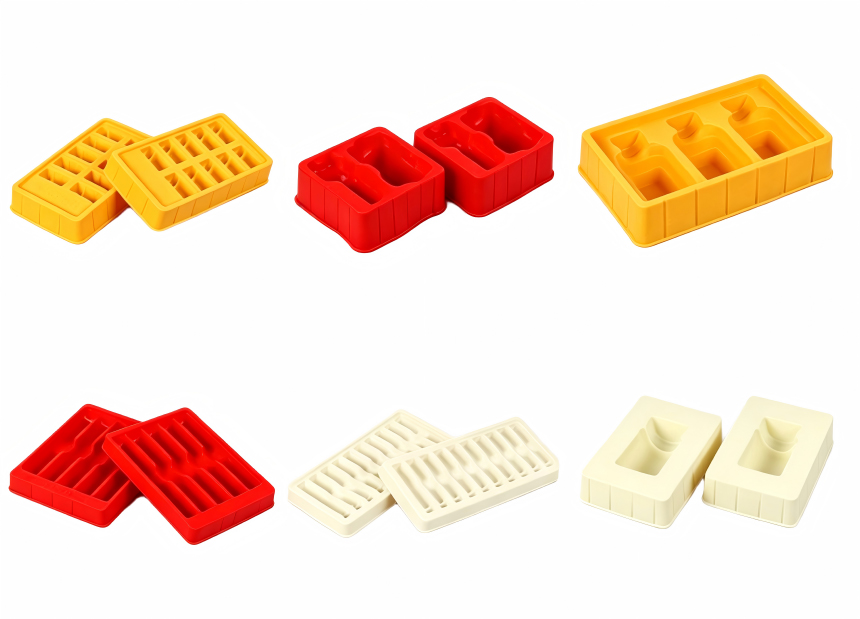
Here is a step-by-step overview of the production process:
1. Material Preparation
Plastic Sheet Selection: A thermoplastic sheet is chosen, typically PVC, PET, PS, or APET, based on required rigidity, clarity, and environmental standards.
Flocking Material: Pre-cut synthetic fibers (usually nylon or polyester) are selected. These fibers are extremely fine (0.2–5.0 denier) and come in various colors and lengths.
2. Vacuum Forming
Heating: The plastic sheet is clamped in a frame and heated in an oven until it becomes soft and pliable.
Forming: The heated sheet is placed over a custom-designed mold (often aluminum). A vacuum pump quickly removes the air between the sheet and the mold, causing the sheet to conform precisely to the mold’s shape, forming the tray.
Cooling & Trimming: The formed tray is cooled, ejected from the mold, and then trimmed to remove excess material (flash).
3. Surface Preparation (Pre-treatment)
The surface of the plastic tray that will be flocked is cleaned and may undergo corona treatment or priming. This increases surface energy and adhesion properties, ensuring the adhesive bonds strongly to the plastic.
4. Adhesive Application
A specialized adhesive (often a water-based or solvent-based flocking glue) is applied evenly to the designated areas of the tray. This can be done via spraying, screen printing, or roller coating, depending on the design.
5. Flocking Process
Electrostatic Flocking: This is the most common method. The tray is grounded, and the flock fibers are fed into a high-voltage electrostatic field (e.g., 30–100 kV). The fibers become vertically polarized and are propelled at high speed into the adhesive-coated surface, where they embed themselves upright.
Mechanical Flocking (Less Common): Fibers are applied by vibrating or blowing them onto the adhesive surface, but this method yields less uniform alignment.
6. Curing & Drying
The tray passes through a drying oven or tunnel to cure the adhesive. This permanently bonds the fibers to the surface, ensuring durability and resistance to shedding.
7. Quality Control & Finishing
Excess, unbound fibers are removed (often by gentle air blowing or vacuuming).
Each tray is inspected for uniform fiber density, color consistency, adhesive coverage, and structural integrity.
Additional steps like printing, logo embossing, or adding inserts may follow.
Key Advantages of the Final Product:
Soft, Luxurious Feel: Provides a high-end tactile experience.
Protection: Excellent cushioning and anti-abrasion for delicate items.
Non-slip & Anti-static: Holds items securely; some formulations can dissipate static.
Aesthetic Appeal: Rich texture and color enhance product presentation.
This combined process allows for the creation of customizable, functional, and visually attractive packaging solutions tailored to specific product needs.


- Disposable sushi tray with lid wholesale
- Custom Disposable Plastic Cups with Logo
- Is blister packaging cheap?
- How to Make Your Own Blister Packaging?
- Advantages of Wine Vacuum Trays
- Custom Packaging Solutions for Precious Metal
- Why choose BlissPak for vacuum forming services?
- What Are The Five Modern Packaging Materials
- Why Bamboo Food Containers Are Better Than Plastic
- The Benefits of Bamboo Fiber Material Food Packaging